

 Image 1 of 2
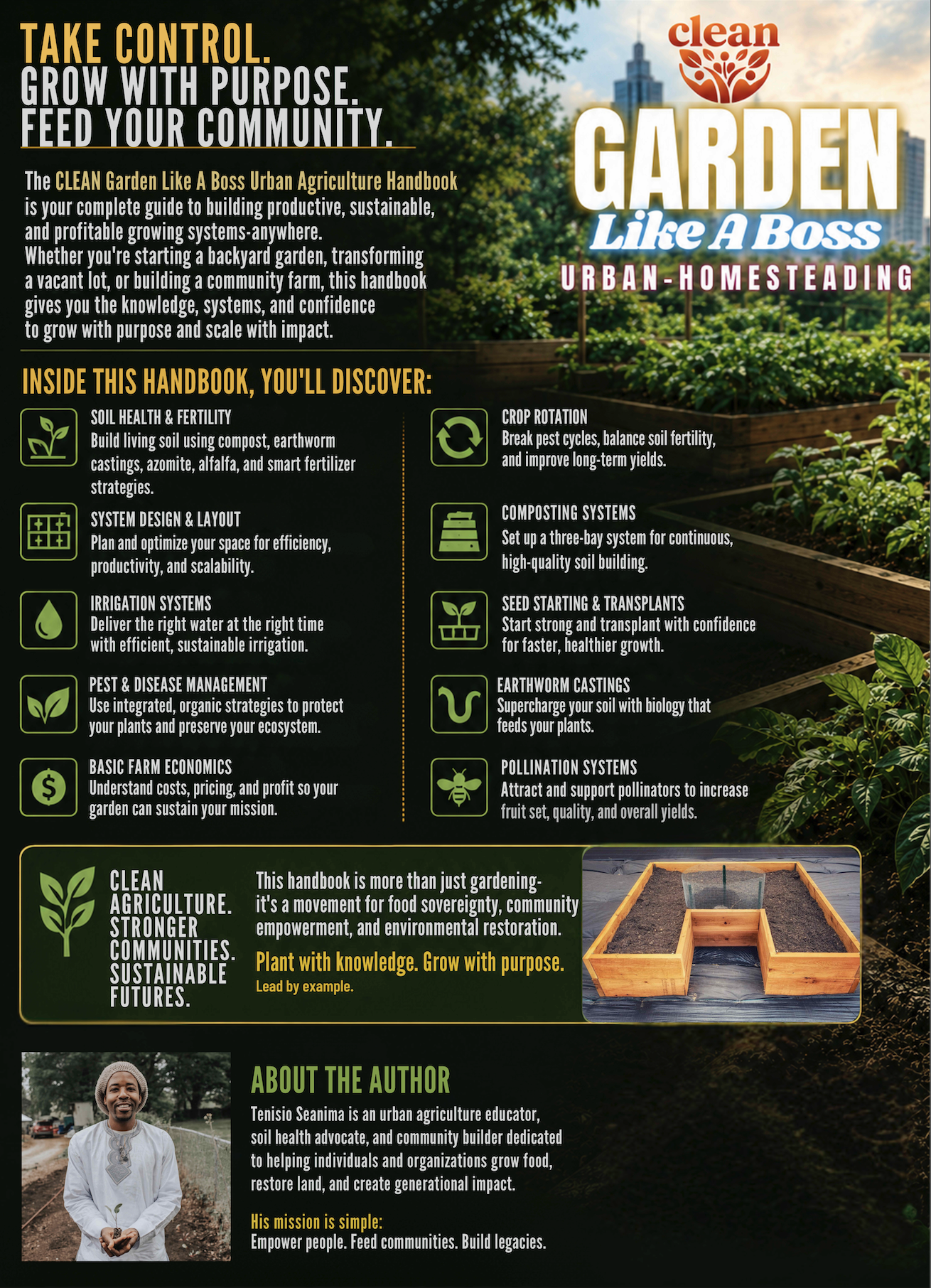 Image 2 of 2
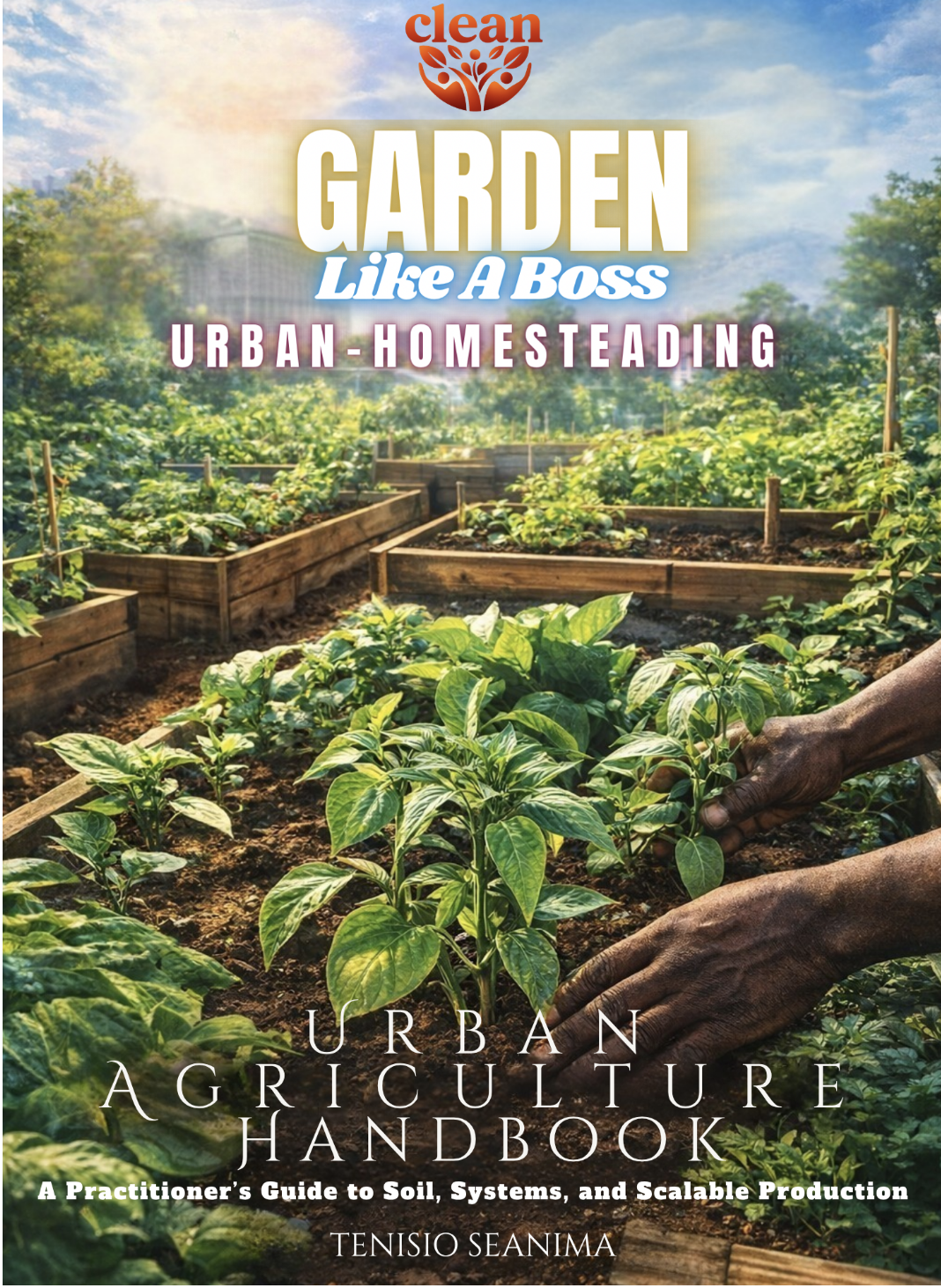
The Garden Like a Boss: Urban Agriculture Handbook is a systems-driven manual designed to move you beyond hobby gardening into intentional, productive, and scalable food production.
Built from the live Garden Like a Boss workshop series, this handbook consolidates proven methodologies into a structured, field-ready framework. It is engineered for individuals who want to produce real results—whether that means feeding their household, reducing food dependency, or building a revenue-generating urban farm.
At its core, this book treats agriculture as a system of inputs, processes, and outputs—not guesswork.
As established in the opening chapters, soil management alone is reframed as a data-driven control system—where testing, interpretation, and targeted action replace assumptions . This level of precision extends throughout the entire handbook.
What This Book Delivers
This is not a collection of tips. It is a complete operating framework for urban agriculture.
1. Soil as a System (Not Dirt)
How to interpret soil tests and correct imbalances precisely
Building organic matter, biology, and mineral balance
Leveraging compost, earthworm castings, and trace minerals strategically
2. Farm Layout & Infrastructure Design
Bed sizing, orientation, and flow optimization
Irrigation planning and water efficiency systems
Designing for labor reduction and scalability
3. Production Planning (Year-Round Output)
Crop selection aligned with climate (Zone 7b–8a compatible systems)
Succession planting for continuous harvests
Crop rotation strategies to maintain soil health
4. Seed Starting & Crop Establishment
Controlled propagation systems
Transplant production workflows
Maximizing early-stage plant success
5. Integrated Pest, Disease & Weed Management
Soil-first plant immunity strategies
Biological, physical, and ecological controls
Reducing dependency on synthetic inputs
6. Season Extension & Climate Control
Low tunnels and high tunnels
Frost protection strategies
Extending your growing window beyond traditional limits
7. Farm Economics & Efficiency
Understanding cost structures
Bed-level productivity analysis
Turning growing into a financially viable system
Who This Book Is For
This handbook is designed for individuals who are serious about outcomes:
Urban growers seeking consistency and yield optimization
Homesteaders who want self-sufficiency with structure
Beginners who want to start correctly from day one
Existing growers ready to scale production and efficiency
Educators and program leaders seeking a repeatable framework
What Makes This Book Different
Most resources focus on what to do.
This handbook focuses on:
Why it works
When to apply it
How systems interact
You are not just learning techniques—you are learning how to think like a producer.
Outcome
By implementing the systems in this handbook, you will be positioned to:
Produce food consistently across seasons
Build and maintain high-performance soil
Reduce input waste and inefficiency
Design a functional, scalable growing space
Transition from consumption → production
Final Positioning
This is not a book you read once.
This is a manual you operate from.
If your objective is to move from casual gardening into structured, productive urban agriculture, this handbook provides the blueprint.
The Garden Like a Boss: Urban Agriculture Handbook is a systems-driven manual designed to move you beyond hobby gardening into intentional, productive, and scalable food production.
Built from the live Garden Like a Boss workshop series, this handbook consolidates proven methodologies into a structured, field-ready framework. It is engineered for individuals who want to produce real results—whether that means feeding their household, reducing food dependency, or building a revenue-generating urban farm.
At its core, this book treats agriculture as a system of inputs, processes, and outputs—not guesswork.
As established in the opening chapters, soil management alone is reframed as a data-driven control system—where testing, interpretation, and targeted action replace assumptions . This level of precision extends throughout the entire handbook.
What This Book Delivers
This is not a collection of tips. It is a complete operating framework for urban agriculture.
1. Soil as a System (Not Dirt)
How to interpret soil tests and correct imbalances precisely
Building organic matter, biology, and mineral balance
Leveraging compost, earthworm castings, and trace minerals strategically
2. Farm Layout & Infrastructure Design
Bed sizing, orientation, and flow optimization
Irrigation planning and water efficiency systems
Designing for labor reduction and scalability
3. Production Planning (Year-Round Output)
Crop selection aligned with climate (Zone 7b–8a compatible systems)
Succession planting for continuous harvests
Crop rotation strategies to maintain soil health
4. Seed Starting & Crop Establishment
Controlled propagation systems
Transplant production workflows
Maximizing early-stage plant success
5. Integrated Pest, Disease & Weed Management
Soil-first plant immunity strategies
Biological, physical, and ecological controls
Reducing dependency on synthetic inputs
6. Season Extension & Climate Control
Low tunnels and high tunnels
Frost protection strategies
Extending your growing window beyond traditional limits
7. Farm Economics & Efficiency
Understanding cost structures
Bed-level productivity analysis
Turning growing into a financially viable system
Who This Book Is For
This handbook is designed for individuals who are serious about outcomes:
Urban growers seeking consistency and yield optimization
Homesteaders who want self-sufficiency with structure
Beginners who want to start correctly from day one
Existing growers ready to scale production and efficiency
Educators and program leaders seeking a repeatable framework
What Makes This Book Different
Most resources focus on what to do.
This handbook focuses on:
Why it works
When to apply it
How systems interact
You are not just learning techniques—you are learning how to think like a producer.
Outcome
By implementing the systems in this handbook, you will be positioned to:
Produce food consistently across seasons
Build and maintain high-performance soil
Reduce input waste and inefficiency
Design a functional, scalable growing space
Transition from consumption → production
Final Positioning
This is not a book you read once.
This is a manual you operate from.
If your objective is to move from casual gardening into structured, productive urban agriculture, this handbook provides the blueprint.